Basketball Club Teams San Diego Helping Athletes Unlock Their Potential
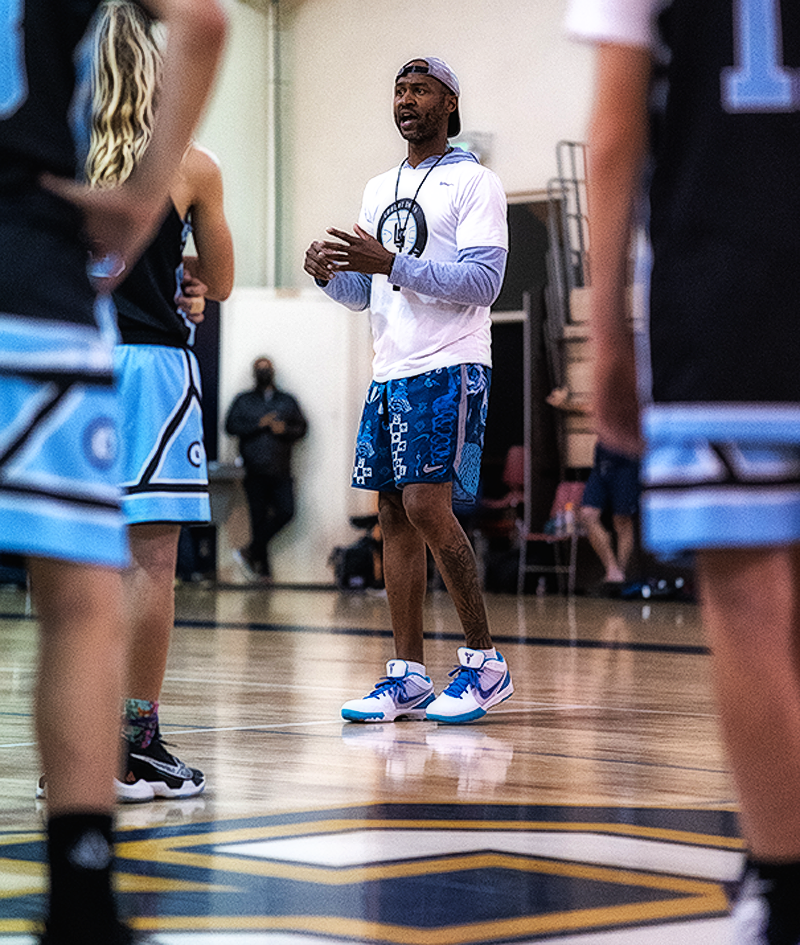
San Diego has always had a strong sports culture, but basketball has taken on a particular energy in recent years. Walk into a school gym on a weeknight, or an indoor facility on a Sunday afternoon, and you will see why. Courts are full. Parents are watching with notebooks in hand. Trainers are running footwork sessions in corners between team practices. Younger players are studying older ones, trying to copy a defensive stance or a clean pull-up jumper. There is ambition in the room, but there is also something more important, development.
That distinction matters when families start searching for Basketball Club Teams San Diego. Many begin the process with a simple goal. They want better competition. Soon they realize that competition alone is not enough. The right club team can sharpen a player’s skills, improve decision-making, build confidence, and create habits that carry into high school basketball and beyond. The wrong fit can do the opposite. It can bury a player in the wrong role, prioritize weekend results over long-term growth, and turn a game the athlete loves into a weekly source of pressure.
The gap between those outcomes often comes down to coaching philosophy, training structure, and how honestly a program evaluates each athlete. Talent matters, of course. So do size, speed, and natural instinct. But most players do not unlock their potential because someone simply told them they were gifted. They improve because a coach identified what they needed, held them accountable, and gave them enough repetition in meaningful environments to grow.
Why club basketball matters in San Diego
San Diego presents a unique environment for basketball development. The region has depth, but it is spread out. A player in North County may have a different set of local options than a player in Chula Vista or central San Diego. Competition can vary by age group, by season, and by program. Some athletes are late bloomers who need patient coaching and a strong skill base. Others are early standouts who need to be challenged before bad habits harden into permanent ones.
Club basketball fills the space between casual recreation and school competition. For many athletes, it is where real identity as a player starts to take shape. A middle school athlete might enter club ball as a scorer who dominates smaller defenders through sheer speed. Two years later, against stronger and more disciplined competition, that same player has to learn pace, change of direction, off-ball movement, weak-hand finishes, and defensive positioning. Club settings expose those gaps quickly.
That is exactly why good teams matter. They do not exist simply to collect jerseys, tournament fees, and social media highlights. They create an environment where players face the right level of discomfort. Not constant failure, and not easy success either. The most effective coaches know how to put athletes in situations where they have to think faster, communicate more clearly, and compete through mistakes.
In San Diego, where families often juggle school demands, traffic, and year-round youth sports choices, that environment needs to be efficient. Time is precious. A ninety-minute practice should not feel like an unplanned scrimmage with a whistle. It should feel like work with purpose.
What real player development looks like
There is a phrase used often in youth basketball, “player development,” and it gets stretched so far that it can lose meaning. Real development is not a cone drill posted online with music in the background. It is not a coach saying every athlete improved just because the season ended. It is measurable, visible, and often less glamorous than people expect.
A developing player usually shows progress in a few specific ways. Footwork gets cleaner. The athlete stops drifting on jumpers. Defensive closeouts become more controlled. Passing reads come a beat earlier. Turnovers decline, not because the player became passive, but because decisions improved. Conditioning becomes game-ready rather than cosmetic. Most importantly, the athlete starts doing the right things without being reminded every possession.
I have seen this happen with players who did not look remarkable at first glance. One guard, undersized and overlooked in middle school, could barely finish in traffic when she joined a club program. What changed her trajectory was not a sudden growth spurt or one hot tournament weekend. It was a year of focused work on balance, touch around the rim, lower-body strength, and reading help defenders. By high school, she was not just surviving against better athletes. She was controlling games with poise. That is development.
The strongest Basketball Club Teams San Diego tend to understand this at a practical level. They do not treat all improvement the same. A point guard may need to learn how to organize a team and absorb pressure without picking up the dribble. A post player may need to become comfortable switching onto smaller players for a few seconds, then recovering. A wing may have to learn that a reliable corner three and physical on-ball defense will earn more minutes than trying to create difficult off-the-dribble shots every trip.
The difference between exposure and readiness
A lot of families talk about exposure. It is an understandable priority, especially when high school recruiting enters the conversation. But exposure without readiness is one of the most common mistakes in youth basketball.
Playing in front of more people does not help if the athlete is not prepared to perform in that setting. College coaches and high-level evaluators are not only looking for points scored. They notice body language after mistakes, effort in transition defense, communication, shot selection, and whether a player understands spacing. A club team that chases events without building those habits can leave athletes visible but not truly competitive.
This is where experienced coaching becomes critical. Good programs know when to push for higher-level tournaments and when to spend more time sharpening fundamentals. They understand that one athlete may benefit from playing up an age group, while another may gain more from playing a larger role against peers. The goal is not to make every player’s path look impressive on paper. The goal is to help each player become better equipped for the next level.
Parents sometimes underestimate how much readiness is built through boring details. Screening angles. Defensive shell work. Outlet pass timing. Talking on every rotation. Late-clock execution. These are not flashy, but they separate polished players from athletes who look talented only in loose games.
What families should evaluate before joining a team
The search for a club program often starts online, but it should not end there. Websites and social feeds can tell you something about branding. They tell you far less about daily standards. If a family is serious about finding one of the right Basketball Club Teams San Diego, they need to look beneath tournament schedules and uniform photos.
A useful evaluation starts with five questions:
- How are practices structured, and how much of that time is true skill work?
- What is the coach-to-player communication style during mistakes?
- How are minutes earned, and is that explained clearly?
- What level of competition does the team regularly face?
- How does the program support long-term development, not just weekend wins?
Those questions reveal a great deal. If practices are mostly scrimmaging, skill growth may be slow. If communication is dominated by public criticism and vague commands, confidence can erode. If playing time is a mystery, athletes often become anxious and parents frustrated. If competition is too weak, strong players stagnate. If competition is too advanced without support, athletes can lose confidence before their game matures.
Watching one practice is often more informative than watching two tournament games. In games, emotions are high and roles are compressed. In practice, you can see teaching. You can see whether coaches correct foot placement, spacing, and timing. You can see whether players are engaged when they are tired. You can also see whether the gym culture feels healthy or performative.
Coaching shapes far more than the scoreboard
Coaching in club basketball is not just about calling plays. At youth and high school ages, coaches influence identity. They shape whether an athlete sees effort as non-negotiable, whether mistakes are part of learning, and whether being “coachable” is a real skill rather than a cliché.
The best club coaches in San Diego tend to do a few things consistently. First, they teach with specificity. Instead of saying “play harder,” they might say, “beat the ball to the spot, chest up, hands high.” That gives an athlete something actionable. Second, they are honest without being careless. Players can handle direct feedback when it is tied to improvement. Third, they know when to challenge and when to steady a player. Not every athlete responds to the same volume, and not every slump needs a speech.
One of the clearest signs of quality coaching is whether athletes improve in areas that are not naturally fun. Most players enjoy shooting drills. Fewer enjoy closeout repetitions, rebounding contact work, or transition defense accountability. Yet those are often the habits that create trust from high school coaches and, later, college staffs.
Strong coaches also understand role clarity. Every athlete wants the ball, but every team needs balance. A player may not love hearing that the next step in development is becoming an elite defender and secondary creator rather than a primary scorer. Still, if that assessment is accurate and communicated well, it can change the athlete’s future. Club coaches who tell every player exactly what they want to hear usually do them a disservice.
The role of competition in unlocking potential
Potential is not unlocked in comfort. It is tested in moments when a player’s first option disappears and a second read has to come instantly. Competition exposes that. The question is whether the competitive environment is calibrated well.
When a team plays only weak opponents, players can put up numbers while learning almost nothing. A guard may dribble too much and still get to the rim. A wing may relax defensively because recovery speed is enough to erase mistakes. A big may never be forced away from the paint. Those shortcuts show up later, often at the worst time.
On the other hand, if competition is too advanced too soon, development can also stall. An athlete who never experiences success may stop trying new skills in games. Instead of growing, the player becomes cautious. This is one of the trade-offs that experienced programs manage carefully. The schedule should stretch a team, not overwhelm it every weekend.
Some seasons call for more challenge. Some call for more confidence-building. A tenth-grade player recovering from an injury may need a different competitive plan than a physically mature eighth grader who has outgrown local play. That is why blanket promises about “elite competition” do not tell families much on their own. Context matters.
Practice habits that actually translate to games
Not every good practice produces better game performance, but every improving player eventually shows the carryover. The translation usually comes from repetition under pressure, not from isolated drills alone.
A useful club practice often moves from technique to decision-making. Shooting form might be refined early, then tested later in live situations with closeouts, time constraints, or fatigue. Ball-handling should not stop at stationary combinations. It needs to become advantage creation, pressure management, and safe passing angles. Defensive drills should lead to live possessions where players must talk, tag cutters, and rebound through contact.
Here are four habits that tend to separate athletes who improve steadily from those who stay inconsistent:
- They practice at game pace even when the drill feels routine.
- They ask questions when they do not understand a read or responsibility.
- They accept correction without visible resistance.
- They compete on defensive possessions with the same focus they bring to scoring chances.
That last point is often where players make the biggest leap. Coaches at every level trust athletes who defend, rebound, sprint back, and stay engaged when the ball is not finding them. Offense draws attention, but complete players earn responsibility.
Parents have a role, but it should be the right one
Club basketball can bring out the best and worst in adults. Most parents want to help. The challenge is knowing what kind of help is actually useful.
The healthiest family approach is usually a steady one. Get the athlete to practice on time. Support recovery, nutrition, sleep, and school balance. Listen after games without turning every car ride into film breakdown. If there is a concern about communication or role, address it respectfully and directly, not through sideline commentary or group text frustration.
I have watched talented players lose momentum because the noise around them got too loud. Every missed shot became a postgame diagnosis. Every game with reduced minutes became proof of bias. Over time, the athlete stopped hearing coaching and started hearing only pressure. Development rarely survives that for long.
Parents should also understand that growth is not always linear. A player may look sharp in workouts, then struggle in games while adapting to a new role or faster pace. That does not always mean something is wrong. Sometimes it means the athlete is in the middle of an important adjustment. The right club team recognizes the difference between a temporary dip and a deeper issue.
San Diego’s basketball landscape rewards fit over hype
One reality of youth sports is that some programs market themselves better than they teach. This is not unique to San Diego, but the local basketball community is large enough that hype can spread quickly. Families hear about shoe affiliations, travel schedules, branded camps, and championship photos. Those details can matter, but they are not the foundation of development.
Fit is usually more powerful than hype. A quiet gym with demanding coaches, smart training sessions, and the right role can do more for a player than a flashy program where the athlete is misused or overlooked. Sometimes the best move for a developing player is not the biggest-name team. It is the program where reps are meaningful, accountability is real, and coaching aligns with the athlete’s stage of growth.
That fit includes personality. Some players thrive under intense verbal challenge. Others respond better to measured correction and clear standards. Some need freedom to create. Others need structure to cut waste from their game. Families should not assume the most visible program is automatically the best place for their child.
The most respected Basketball Club Teams San Diego usually earn that reputation over time through outcomes that coaches recognize immediately. Their players rotate on defense. They box out. They know where to stand. They make simple passes on time. They do not unravel after a bad quarter. That kind of polish does not happen by accident.
When athletes start to see themselves differently
The real value of a club team often shows up before the stat line does. It appears when a player carries themself with more confidence. When they stop avoiding contact. When they speak up in huddles. When they begin to understand the game instead of just reacting to it.
That internal shift is a major part of unlocking potential. Once athletes believe they can handle pressure, solve problems, and contribute in more than one way, their ceiling expands. Coaches can see it in body language. Teammates can feel it. Even school coaches notice when a player returns from club season sharper, stronger, and more composed.
This is especially important for athletes who do not fit the obvious mold. The undersized guard, https://lukasbjnk831.rivetgarden.com/posts/basketball-club-teams-san-diego-and-the-pursuit-of-excellence the late-growing post, the wing who has tools but limited polish, these players often need the right club setting to bridge the gap between raw ability and actual production. They need reps, instruction, and belief that is backed by standards.
No club team can manufacture potential that is not there. But the right one can uncover more of it than a family realized existed. It can turn scattered ability into dependable skill. It can turn effort into discipline. It can turn interest into commitment.
That is the promise at the center of club basketball when it is done well. Not just more games, more travel, or more visibility. Better athletes, built carefully over time, in gyms where details still matter. In a city like San Diego, where the talent pool keeps deepening and the expectations keep rising, that kind of development is not optional. It is the difference between playing basketball and truly growing through it.
Lamont Smith Basketball Academy
888 Clairemont Mesa Blvd Suite T-2, San Diego, CA 92123
(619) 639-8778
FAQ About Basketball Club Teams San Diego
How can a player join an LSBA club team?
Players are evaluated during practices so the coaching staff can recommend an appropriate team and development level. Families should contact the academy to confirm current openings and evaluation details.
Are club teams available for newer basketball players?
Yes. LSBA describes multiple levels, including a developmental option for newer players as well as more competitive teams for athletes with prior club experience.
What do LSBA club team practices emphasize?
Practices emphasize basketball fundamentals, team defense, structure, communication, and player development. The specific focus may vary according to the team and experience level.
Do all LSBA teams travel?
Travel expectations vary by level. Some teams focus on local competition, while advanced teams may participate in tournaments elsewhere in Southern California or beyond. Families should confirm the current schedule before enrolling.